Arctic Circle in Winter vs Summer: Which Season Should You Pick?
Choose summer for the road trip: long light, open visitor centers, mild days. Choose winter for snow, atmosphere and the aurora. Side-by-side comparison.
Choose summer for the road trip and winter for the atmosphere and the aurora. A summer Arctic Circle tour from Fairbanks gives you mild temperatures, almost endless daylight, open visitor centers and green tundra, while a winter tour gives you snow, deep cold, short days and a dark drive home with a chance of the northern lights. Both are the same long day of 12 to 18 hours, mostly in a van on the Dalton Highway, so the choice is about what you want to see from the window. Our Arctic Circle tours comparison lists the tours for each season.
Check Availability
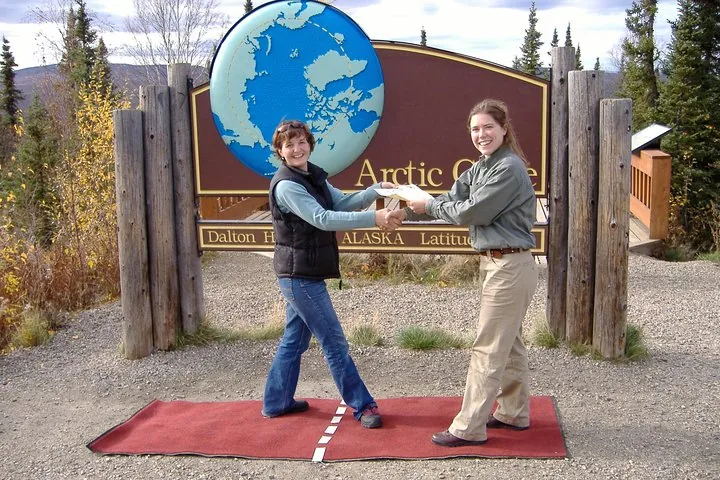
Midnight Sun Arctic Circle Drive Adventure
- 4.6/5 (38 reviews)
- About 16 hours
- Operated by Northern Alaska Tour Company
Includes Driver-guide with live commentary for the whole drive · Official Arctic Circle Adventure Certificate · Orientation …
You'll choose your date and complete the booking on Viator.

Summer vs winter at a glance
| Summer (June–August) | Winter (December–March) | |
|---|---|---|
| Fairbanks avg high / low | 66–73°F / 48–53°F | 1–25°F / −17 to −3°F |
| On the Dalton | Coldfoot highs average in the 50s°F | Lows commonly −20s to −40s°F, windchills to −70°F |
| Daylight in Fairbanks | Almost 22 hours at the June solstice | Under 4 hours at the December solstice |
| Northern lights | Not visible (sky too light) | Season runs 21 August to 21 April |
| Landscape | Green tundra, wildflowers to mid-July | Snow, frost, frozen Yukon River |
| Bugs | Mosquitoes mid-June into August | None |
| Visitor centers | Open late May to mid-September | Yukon Crossing closed, Coldfoot limited hours |
| Self-drive | Possible with the right vehicle | BLM advises against, late October to early April |
| Return to Fairbanks | Around midnight on 16-hour drives, in twilight from mid-May to late July | Late night or early morning on aurora tours |
Why summer suits the road trip
Summer is when the Dalton Highway is at its most driveable and the sights along it are easiest to enjoy. The road is gravel and dust or mud, not ice. Fairbanks has about 70 days of continuous light, from about 17 May to 27 July, so on a 16-hour tour you see every mile of the pipeline, the Yukon River crossing and the open ridge of Finger Mountain in daylight. BLM visitor facilities are open: the Yukon Crossing contact station beside the bridge is staffed in summer, and the Arctic Interagency Visitor Center in Coldfoot runs from late May to mid-September.
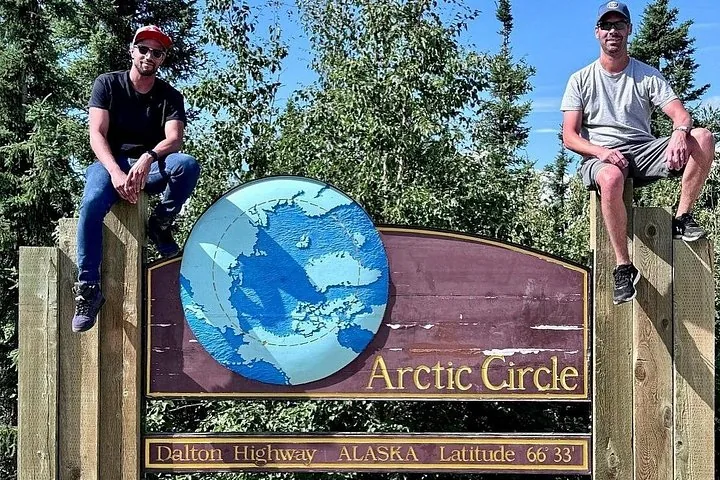
The BLM’s seasonal notes add colour. From June until mid-July wildflowers brighten the tundra, and autumn colours peak around late August in the Brooks Range and early September south of the Yukon. On and around 21 June the sun stays up all night at the Arctic Circle itself, the one time of year the sign sits under a true midnight sun.
The downsides are real but manageable. Mosquitoes emerge in mid-June and last into August, so bring repellent and a head net. Thunderstorms are common in early summer between Fairbanks and the Yukon, and snow can fall north of Coldfoot in any month. There is no aurora: the sky is simply too light.
The summer tour this guide features is the Midnight Sun Arctic Circle Drive Adventure from Northern Alaska Tour Company, a 16-hour day from $269 per person, rated 4.6 from 38 reviews. Check-in is at 9:00 to 9:15 a.m. at the company’s office on the airport’s East Ramp, hotel pickup is not included and all sales are final (our review). With hotel pickup, the Arctic Circle Day Tour runs about 13 hours from $335 per person, rated 4.7 from 731 reviews. More choices are on the summer tours page.
Other Experiences
Other experiences you might enjoy
Summer and winter trips from Fairbanks: midnight-sun drives up the Dalton Highway to the Yukon River and Finger Mountain, and snowy winter tours that watch for the aurora on the way home.

Why winter suits the atmosphere and the aurora
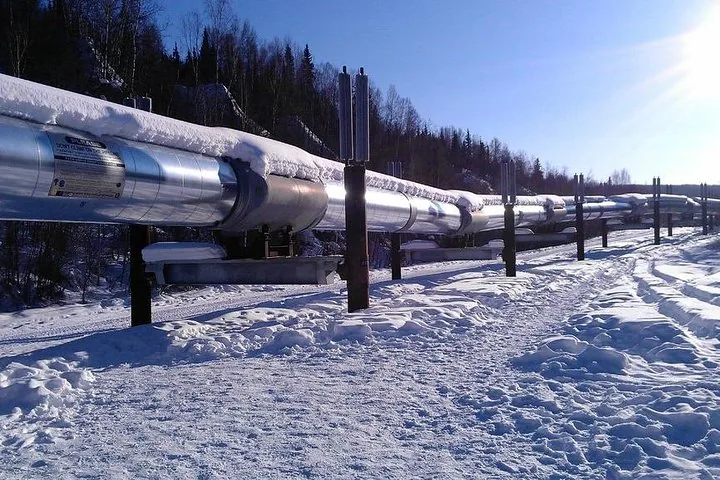
Winter turns the same road into a snowbound expedition. The spruce are frosted, the Yukon is frozen, and the sun stays low for the few hours it is up. Fairbanks normal lows run from −3°F in March to −17°F in January, and it is colder farther north; the US record low of −80°F was set at Prospect Creek Camp, near the Dalton, in January 1971. Dress in layers and follow our what to wear guide.
The reward is the dark. On aurora combo tours the return drive happens at night, and the UAF Geophysical Institute says 9 p.m. to 3 a.m. is when displays over interior Alaska are most likely. Explore Fairbanks says the aurora shows on an average of four out of five nights when the sky is clear and dark enough. It is never guaranteed, though, and no operator refunds for clouds; Arctic Circle and northern lights explains the trade-offs.
The BLM keeps the highway open all winter but advises independent drivers against travel between late October and early April, and in winter services exist only at Yukon River Camp, Coldfoot and Deadhorse. That makes a guided tour the practical way to go. The Arctic Circle Winter Drive Adventure is rated 4.9 from 166 reviews, from $309 per person for 16 hours. For an aurora watch built in, the Northern Lights & Arctic Circle Tour runs 12 to 14 hours from $363 per person, rated 4.6 from 989 reviews, and the Arctic Circle Northern Lights Full-Day Trip leaves at 1 p.m. and returns around 3 a.m., from $330 per person. See the winter tours page.
The shoulder months
You do not have to choose an extreme. From 21 August the nights are dark enough for aurora again while Fairbanks still averages a 66°F high in August and 55°F in September, and the BLM notes mid-August brings “rain, cool days, frosty nights, and the northern lights”. Late March and April are the spring version, with Fairbanks highs of 25°F in March and 46°F in April and the aurora season running to 21 April. Our best time to visit guide has every month in one table.
Frequently asked questions
Is it better to visit the Arctic Circle in winter or summer?
Summer for the scenery, mild weather and open visitor centers; winter for snow and the chance of aurora. Late August and September offer some of both.
How cold does the Arctic Circle get in winter?
Along the Dalton, lows commonly reach the −20s to −40s°F, with windchills to −70°F. Fairbanks normal lows are −11 to −17°F from December to February.
How many hours of daylight are there in summer?
Fairbanks gets 21 hours 49 minutes at the June solstice and stays light through the night from mid-May to late July.
Is the Arctic Circle completely dark in winter?
No. Even on 21 December the sun barely clears the horizon at midday there, and on other winter days it rises briefly.
Do winter tours still stop at the Yukon River and the sign?
Yes. Yukon River Camp operates in winter, and the Arctic Circle sign is reachable year-round; see the itinerary guide.
Ready to book?
Pick your season and compare dates on the Arctic Circle tours page, or check availability on the homepage.
Cross the Arctic Circle This Season
The Dalton Highway by day, the 66°33′ sign by evening and an aurora watch on the drive back to Fairbanks.
Check Availability & Book