Best Time to Visit the Arctic Circle in Alaska, by Goal and Month
June to August for a mild road trip, 21 August to 21 April for aurora, late August to early September for both. Monthly Fairbanks temperatures and daylight.
The best time to visit the Arctic Circle from Fairbanks depends on what you want from the trip: June to August for the mildest weather and the longest daylight on the Dalton Highway, 21 August to 21 April for a chance of the northern lights, and late August to early September if you want autumn colour with a possible aurora on the same trip. Guided tours run year-round, so there is no closed season, only a trade between light, warmth and dark skies. Our Arctic Circle tours comparison shows which trips run in each season.
Check Availability

Arctic Circle Day Tour
- 4.7/5 (731 reviews)
- 13 hours
- Operated by Alaska Wild Lights
Includes Local driver-guide · Hotel pickup and drop-off within Fairbanks city limits · Personalized Arctic Circle certificate
You'll choose your date and complete the booking on Viator.
Same tour, also on GetYourGuide
From $335 per person · ★ 4.6 from 5 GetYourGuide reviews
Each platform sets its own price and collects its own reviews, so compare both before you book on Viator.
Best time by goal
| Your goal | Best period | Why |
|---|---|---|
| Northern lights | 21 August – 21 April | The aurora season used by Explore Fairbanks and Northern Alaska Tour Company |
| Comfortable temperatures | June – August | Fairbanks highs of 66 to 73°F |
| Maximum daylight | June | Almost 22 hours of daylight in Fairbanks at the solstice |
| Autumn colour plus a possible aurora | Late August – early September | Colour peaks in the Brooks Range in late August and south of the Yukon in early September |
| Snowy landscape | Late October – late March | The snowy part of the aurora season |
| Deep-winter atmosphere | December – March | Normal highs from 1 to 25°F, short days |
| Visitor centers and campgrounds open | Late May – mid-September | BLM summer season |
If you want one answer, early September is the overlap month. The nights are dark enough for aurora again, Fairbanks still averages a 55°F high, and the BLM puts peak autumn colour south of the Yukon River at early September. The trade-off is weather: the BLM notes that by mid-August the Dalton brings “rain, cool days, frosty nights, and the northern lights”, and that snow begins to fly by late August or early September.
Month by month
The figures below are Fairbanks normals, since there is no official weather station at the Arctic Circle sign. The circle itself is about 140 miles farther north and usually colder; the BLM says Coldfoot summer highs average in the 50s°F, and winter lows on the Dalton commonly sit in the −20s to −40s°F, with windchills down to −70°F.
| Month | Avg high °F | Avg low °F | Daylight in Fairbanks (mid-month) | On the road |
|---|---|---|---|---|
| January | 1 | −17 | about 5 h | Aurora season, deep cold |
| February | 12 | −11 | about 9 h | Aurora season, snow |
| March | 25 | −3 | about 12 h | Aurora season, lengthening days |
| April | 46 | 22 | about 15 h | Aurora ends 21 April |
| May | 62 | 39 | about 19 h | Migrating birds late May, snow may linger |
| June | 72 | 50 | almost 22 h | Wildflowers, mosquitoes from mid-June |
| July | 73 | 53 | about 20 h | Warmest month, thunderstorms possible |
| August | 66 | 48 | about 17 h | Aurora returns 21 August, colour late in the month |
| September | 55 | 36 | about 13 h | Colour south of the Yukon, first snow possible |
| October | 34 | 18 | about 10 h | Freeze-up, aurora |
| November | 12 | −4 | about 6 h | Aurora, cold and dark |
| December | 4 | −13 | about 4 h | Shortest days, aurora |
At the solstices the extremes are sharper. Fairbanks gets 21 hours 49 minutes of daylight around 21 June and under four hours around 21 December. At the Arctic Circle sign the sun stays up all night only on or around 21 June and stays below the horizon only on or around 21 December. Even then, standard calculations still give a short, dim midday. On any other date you see a normal sunrise and sunset, just very early or very late.
Other Experiences
Other experiences you might enjoy
Arctic Circle trips for every season from Fairbanks: summer drives past the Yukon River and Finger Mountain in long daylight, and winter Dalton Highway tours with an aurora watch on the way home.

Summer: June to August
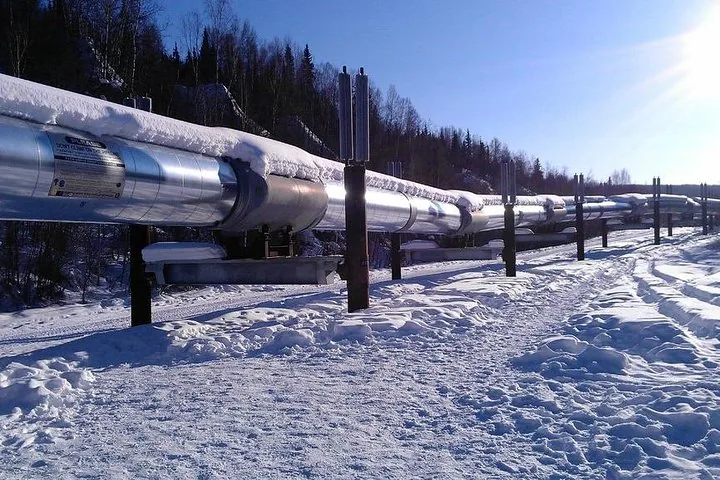
Summer is the easy season for the road. The Dalton is dry or muddy instead of icy, the visitor centers are open, and on a 16-hour day you travel almost entirely in daylight. Explore Fairbanks counts about 70 days of continuous light, from about 17 May to 27 July, when the sky never gets fully dark.
The costs are insects and no aurora. The BLM warns that hordes of mosquitoes emerge in mid-June and last into August, with biting flies into September, so pack repellent and a head net. Snow is still possible north of Coldfoot in any month, so bring a warm layer.
For a summer trip, the Arctic Circle Day Tour from Alaska Wild Lights runs about 13 hours from $335 per person, rated 4.7 from 731 reviews, with hotel pickup within Fairbanks city limits (our review). The Midnight Sun Arctic Circle Drive Adventure from Northern Alaska Tour Company costs from $269 per person for 16 hours, and in the summer season the Arctic Circle Adventure – Full-Day Guided Tour starts at $260 per person. See all of them on the summer tours page.
Winter: October to April
Winter trades comfort for atmosphere. The landscape is snow and frosted spruce, the days are short, and the return drive happens in darkness, which is exactly when combo tours watch for the aurora. Fairbanks normal lows run from −3°F in March to −17°F in January, and the BLM advises independent drivers against travel between late October and early April. On a guided tour the van does the driving, but you still need proper cold-weather clothing; our what to wear guide has the list.
The Arctic Circle Winter Drive Adventure is rated 4.9 from 166 reviews, from $309 per person, and like all Northern Alaska Tour Company bookings its sales are final. For an aurora watch built in, read Arctic Circle and northern lights and the winter tours page.
Frequently asked questions
What is the best month to visit the Arctic Circle?
For a comfortable road trip, July, with Fairbanks highs of 73°F. For the northern lights plus milder weather, September. For the snowiest winter scenes, December to March.
When is the best time to see the northern lights at the Arctic Circle?
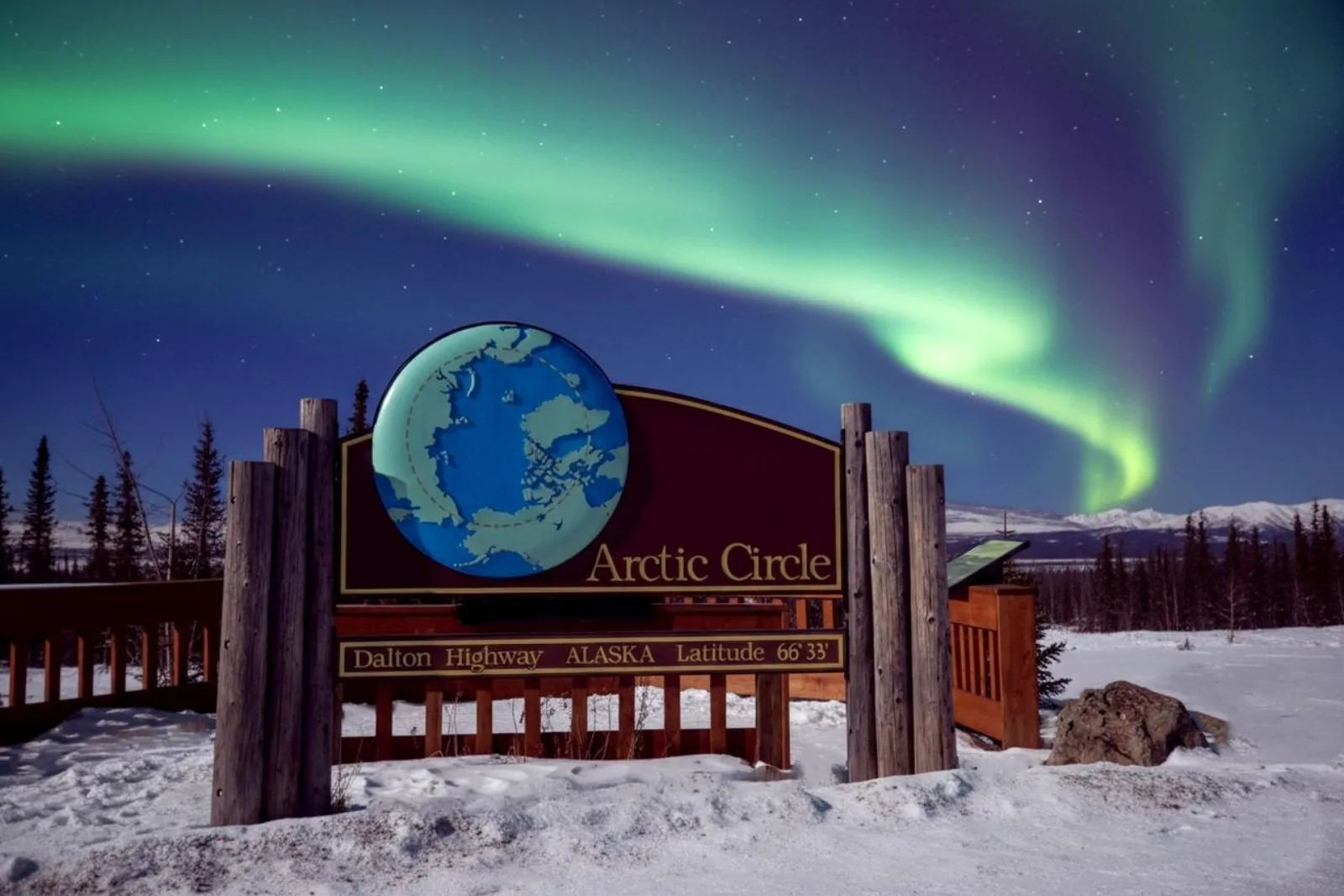
Any night from 21 August to 21 April with clear skies. The best hours are roughly 9 p.m. to 3 a.m., according to the UAF Geophysical Institute.
How cold is the Arctic Circle in winter?
Colder than Fairbanks. Lows commonly fall to the −20s to −40s°F along the Dalton, with windchills to −70°F.
Is there midnight sun at the Arctic Circle?
Yes, on and around 21 June. Fairbanks itself never quite gets it, but its nights stay light from mid-May to late July.
Do Arctic Circle tours run all year?
Yes, though individual tours are seasonal. Compare winter vs summer to choose.
Ready to book?
Once you know your season, check dates on the Arctic Circle tours page or the homepage availability box.
Cross the Arctic Circle This Season
The Dalton Highway by day, the 66°33′ sign by evening and an aurora watch on the drive back to Fairbanks.
Check Availability & Book