What to Wear on an Arctic Circle Tour
Season-by-season clothing for an Arctic Circle tour from Fairbanks: winter layers, boots, mittens, hand warmers, batteries and camera gear, plus summer bug kit.
Dress for the coldest stop of the day, not for your hotel lobby. From December to February that means a wool or synthetic base layer, a fleece or down mid layer, an insulated parka, mittens, a hat that covers your ears and insulated boots with good traction, because Fairbanks averages a January low of −17°F and the Dalton Highway north of the Yukon River runs colder and windier. In summer you swap the parka for a rain jacket, a fleece and a mosquito head net. Several Arctic Circle tours from Fairbanks list cold-weather gear as not included, so plan on bringing your own.
Check Availability
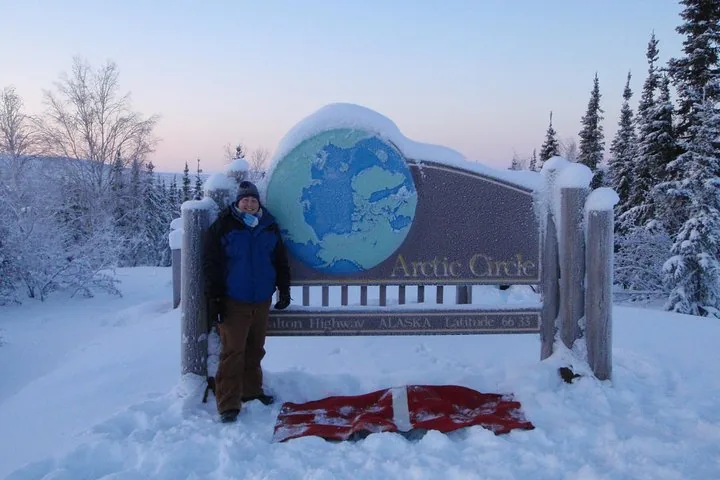
Arctic Circle Winter Drive Adventure
- 4.9/5 (166 reviews)
- About 16 hours
- Operated by Northern Alaska Tour Company
Includes Professional driver-guide · Live commentary on board throughout the day · Official Arctic Circle Adventure Certificate
You'll choose your date and complete the booking on Viator.

Why the packing list changes so much by season
An Arctic Circle tour is a 12 to 18 hour day, mostly in a heated van on a gravel road, broken by short stops in the open at the Yukon River, a pipeline pullout, Finger Mountain or the Arctic Circle sign, often in wind. You want layers you can open in the van and close fast at the door.
Explore Fairbanks puts it simply: wear as many layers as you can without making yourself sweat, and avoid cotton, tight clothing and outer layers that are not waterproof. Sweat in a cotton shirt turns cold at the first stop, and tight boots cut circulation.
Daylight changes the list too. The Arctic Circle Winter Drive Adventure warns that your day may be more night than daylight, while June brings almost 22 hours of daylight to Fairbanks. For the full climate picture, see the best time to visit the Arctic Circle.
December to February: dressing for real cold
These are the coldest tour months. Fairbanks normals run from a high of 4°F and low of −13°F in December to a high of 1°F and low of −17°F in January, with February a little milder at 12°F and −11°F. North of the Yukon, lows commonly sit in the −20s to −40s°F, and the BLM warns that windchills on the highway reach −70°F. At a −34°F wind chill, the National Weather Service puts frostbite on exposed skin at 10 to 30 minutes.
Wear a base layer top and bottom, a fleece or down mid layer, an insulated parka with a hood, insulated snow pants, a hat over the ears and a neck gaiter you can pull over your nose. On aurora departures you are outside again after midnight. The winter Arctic Circle tours page compares the dark-season options.
Other Experiences
Other experiences you might enjoy
Once you are dressed for the cold, there is more to do around Fairbanks: aurora nights, a soak at Chena Hot Springs, and other Dalton Highway and Arctic Circle trips.
March: still winter at the Circle
March brings longer days but not warmth. Fairbanks averages a high of 25°F and a low of −3°F, and the Dalton runs colder than town. Pack the full winter kit, plus sunglasses for sun on snow. The aurora season runs until 21 April, so late-night viewing stops on combination tours still need every layer.
September and October: the shoulder months
September in Fairbanks averages a high of 55°F and a low of 36°F, and October drops to 34°F and 18°F. BLM notes that snow begins to fly by late August or early September on the Dalton. The aurora season opens on 21 August, so many evening tours finish in the small hours, near the coldest part of the night.
Bring an insulated jacket, a waterproof shell, a fleece, a hat, gloves and waterproof boots with grip; by late October, winter boots and mittens. Biting flies and gnats can last into September, so pack repellent early in the month.
Summer: rain, sun and mosquitoes
From June to August Fairbanks reaches highs of 72 to 73°F, and BLM says temperatures south of the Brooks Range can occasionally reach the high 80s. The Arctic Circle is cooler, and Coldfoot, 60 miles farther north, averages highs in the 50s. Thunderstorms are common in early summer between Fairbanks and the Yukon River.
The Arctic Circle Day Tour advises sturdy shoes and a rain or weather jacket, noting that the Arctic can get very warm and that rain is always possible. Add a fleece for the evening and for Finger Mountain, where BLM warns of strong winds on the ridge. Mosquitoes emerge in mid-June and last into August; BLM advises DEET repellent and a head net. For more on the midnight-sun months, read the summer Arctic Circle tours page.
Packing list by season
| Item | Dec–Feb | March | Sept/Oct | Summer |
|---|---|---|---|---|
| Base layer (wool or synthetic) | Top and bottom | Top and bottom | Top, bottom in Oct | Optional |
| Mid layer | Down or thick fleece | Fleece or down | Fleece | Light fleece |
| Outer layer | Insulated parka, snow pants | Insulated parka, snow pants | Insulated jacket, waterproof shell | Rain jacket |
| Hands | Mittens plus thin liners | Mittens plus liners | Gloves | Light gloves for wind |
| Feet | Insulated boots, wool socks | Insulated boots, wool socks | Waterproof boots | Sturdy walking shoes |
| Head and face | Hat over ears, neck gaiter | Hat, neck gaiter | Warm hat | Sun hat, head net |
| Extras | Hand and foot warmers, spare batteries | Hand warmers, sunglasses | Repellent early Sept | DEET repellent |
Boots, gloves and base layers
Boots matter most because the stops are on snow, ice, gravel and tundra. Look for insulated, waterproof boots with real tread and room for one wool sock. The Arctic Circle wayside has gravel paths, and the walk at Finger Mountain is a half-mile interpretive trail on an exposed ridge; see the Finger Mountain guide for what that stop looks like.
For your hands, mittens are warmer than gloves; a thin liner glove underneath lets you work a phone or camera for a minute without bare skin. Base layers should be merino wool or synthetic, never cotton.
Batteries, hand warmers and camera gear
Explore Fairbanks is blunt: batteries die quickly in the cold. Apple designs iPhones for 32 to 95°F and says very cold use can shorten battery life and shut the phone off, with normal life returning once it warms up. Keep your phone and spare camera batteries in an inside pocket, and bring a charged power bank. Cell service is very limited on the Dalton Highway and there is none at the Arctic Circle wayside, so treat the phone as a camera, not a lifeline.
Hand and foot warmers are sold in Fairbanks sporting goods and grocery stores. A warmer in a zip-lock bag with your spare batteries keeps them going longer. For the camera, Explore Fairbanks photographers recommend a tripod for any aurora shot, from a smartphone to a full DSLR, and putting the lens cap on and the camera in a zip-lock bag before you bring it back into the warm van, so condensation forms on the bag instead of the lens. Our Arctic Circle and northern lights guide covers the aurora side of the night.
What the tour listings ask you to bring
The Northern Lights & Arctic Circle Tour lists cold-weather gear as excluded and asks you to dress in layers. The Arctic Circle & Northern Lights – Dalton Highway Tour also excludes cold-weather gear and asks for warm clothing and warm shoes. Northern Alaska Tour Company listings say the tours run in all weather and ask you to dress appropriately. The summer-season Arctic Circle Adventure – Full-Day Guided Tour asks for a passport or ID card. If a listing is silent on gear, ask.
Frequently asked questions
What should I wear on an Arctic Circle tour in winter?
A wool or synthetic base layer, a fleece or down mid layer, an insulated parka, insulated snow pants, mittens with liner gloves, a hat over the ears, a neck gaiter and insulated waterproof boots. Lows north of the Yukon commonly reach the −20s to −40s°F.
How cold does the Arctic Circle get in winter?
BLM puts winter windchills on the Dalton Highway as low as −70°F, and lows commonly fall into the −20s to −40s°F. The coldest temperature officially recorded in the United States, −80°F, came from Prospect Creek Camp, south of Coldfoot, in January 1971.
Do Arctic Circle tours provide cold-weather gear?
Two of the tours on this site list it as excluded: the Northern Lights & Arctic Circle Tour and the Arctic Circle & Northern Lights – Dalton Highway Tour. Plan to bring your own unless the operator confirms otherwise.
What should I bring for summer tours?
A rain jacket, a fleece, sturdy shoes, sunglasses, DEET repellent and a mosquito head net. Mosquitoes are out from mid-June into August.
Ready to book?
Once your layers are sorted, compare departures on the Arctic Circle tours from Fairbanks homepage, or read our breakdown of the Arctic Circle Winter Drive Adventure if you are going in the dark season.
Cross the Arctic Circle This Season
The Dalton Highway by day, the 66°33′ sign by evening and an aurora watch on the drive back to Fairbanks.
Check Availability & Book